
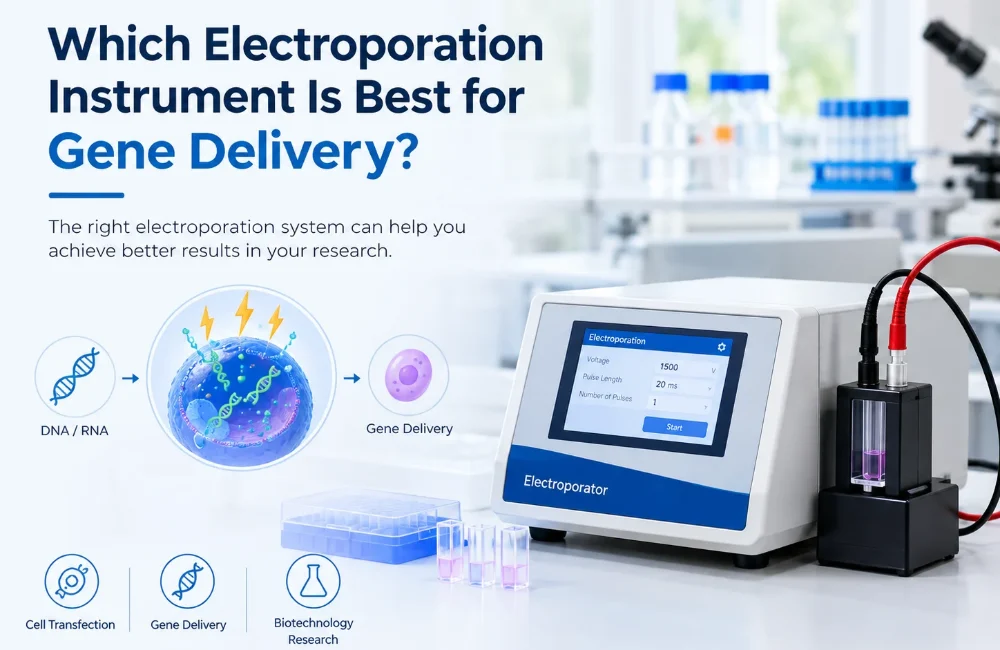
Gene delivery is an important part of biotechnology and life science research. It helps researchers introduce DNA, RNA, or other molecules into cells for different research applications. One common method used for this purpose is electroporation.
Choosing the right Electroporation Instrument depends on the type of cells, sample size, research application, and level of control needed during the experiment. A suitable system can help researchers achieve consistent results while making the transfection process easier to manage.
What Is Electroporation?
Electroporation is a technique that uses short electrical pulses to temporarily make the cell membrane more permeable. This allows genetic material or other molecules to enter the cells.
The method can be used with different types of cells, including bacterial, yeast, mammalian, and other research cell types. Because different cells can respond differently to electrical pulses, researchers need a system that provides suitable control over important parameters.
For laboratories working with cell-based research, electroporation can be used along with other laboratory systems and Cell culture equipment to support a complete research workflow.
How to Choose the Right Electroporation Instrument?
There is no single system that is best for every laboratory. The right choice depends on the research requirements.
1. Consider the Cell Type
The first thing to check is the type of cells you work with. Different cells may require different electrical conditions for successful gene delivery instrument.
Before selecting a system, check whether it supports the cell types used in your laboratory. This can help reduce unnecessary testing and improve the chances of getting consistent results.
2. Check Pulse Control
Pulse voltage, pulse length, and pulse type can affect the outcome of electroporation. A good system should provide suitable control over these settings.
Researchers may need different conditions for different experiments. Therefore, having flexible pulse settings can be useful when working with multiple cell types or applications.
3. Look at Sample Capacity
Laboratories have different research needs. Some researchers may work with small numbers of samples, while others may need to process several samples during an experiment.
Consider the number of samples you normally handle and choose a system that fits your workflow. This can help save time and make experiments easier to organize.
4. Check Ease of Use
A laboratory instrument should be simple to operate. Clear controls, easy-to-understand settings, and a straightforward workflow can make a difference, especially when the instrument is used regularly by different researchers.
Modern electroporators may offer programmed settings and user-friendly controls that help researchers manage repeated experiments more easily.
5. Consider Accessories and Consumables
The instrument is only one part of the electroporation workflow. Appropriate accessories and consumables are also important for carrying out experiments correctly.
Before purchasing, check the availability of compatible Electroporation accessories, consumables, and other required components. Easy access to these items can help avoid delays in research work.
Why Does the Manufacturer Matter?
The manufacturer can also be an important factor when choosing an electroporation system. Reliable electroporation manufactures usually provide product information, technical documentation, application support, and service assistance.
Researchers should also check the product specifications, compatibility, warranty, technical support, and availability of replacement accessories before making a decision.
A trusted supplier can make the purchasing process easier by helping laboratories compare different models according to their actual requirements.
Which Electroporation Instrument Is Best for Gene Delivery?
The best Electroporation Instrument is one that matches your cell type, research application, sample volume, and required pulse conditions.
Instead of choosing a system only based on price or specifications, laboratories should consider how the instrument will fit into their daily research workflow. Ease of use, flexibility, accessories, technical support, and long-term service are also important.
For researchers who are unsure which model is suitable, discussing the application and cell type with a technical sales team can help narrow down the available options.
Choosing the Right Solution for Your Laboratory
Gene delivery instrument experiments require careful control and suitable equipment. A well-selected electroporation system can support research involving cell transfection, molecular biology, biotechnology, and other life science applications.
Labmate Asia supplies laboratory instruments and solutions for biotechnology, life sciences, pharmaceuticals, healthcare, and research laboratories across India. Our team can help researchers identify suitable equipment based on their application and laboratory requirements.
When selecting an electroporation system, focus on your actual research needs rather than choosing a product simply because it has more features. The right combination of instrument, accessories, consumables, and technical support can help create a more reliable laboratory workflow.